


Leadership development is often anchored in business outcomes: KPIs, efficiency, and strategic execution. But Optify’s customer data from 2024–2025 tells a different story.
Across nearly 2,000 coaching goals analyzed from 2019–2025, leaders are increasingly prioritizing the interpersonal skills that shape how work gets done, not just what gets done. In fact, “soft skills” dominated the top coaching topics: Listening (~18%), Communication Skills (~17%), and Feedback (~16%) together represented more than half of all coaching goals.
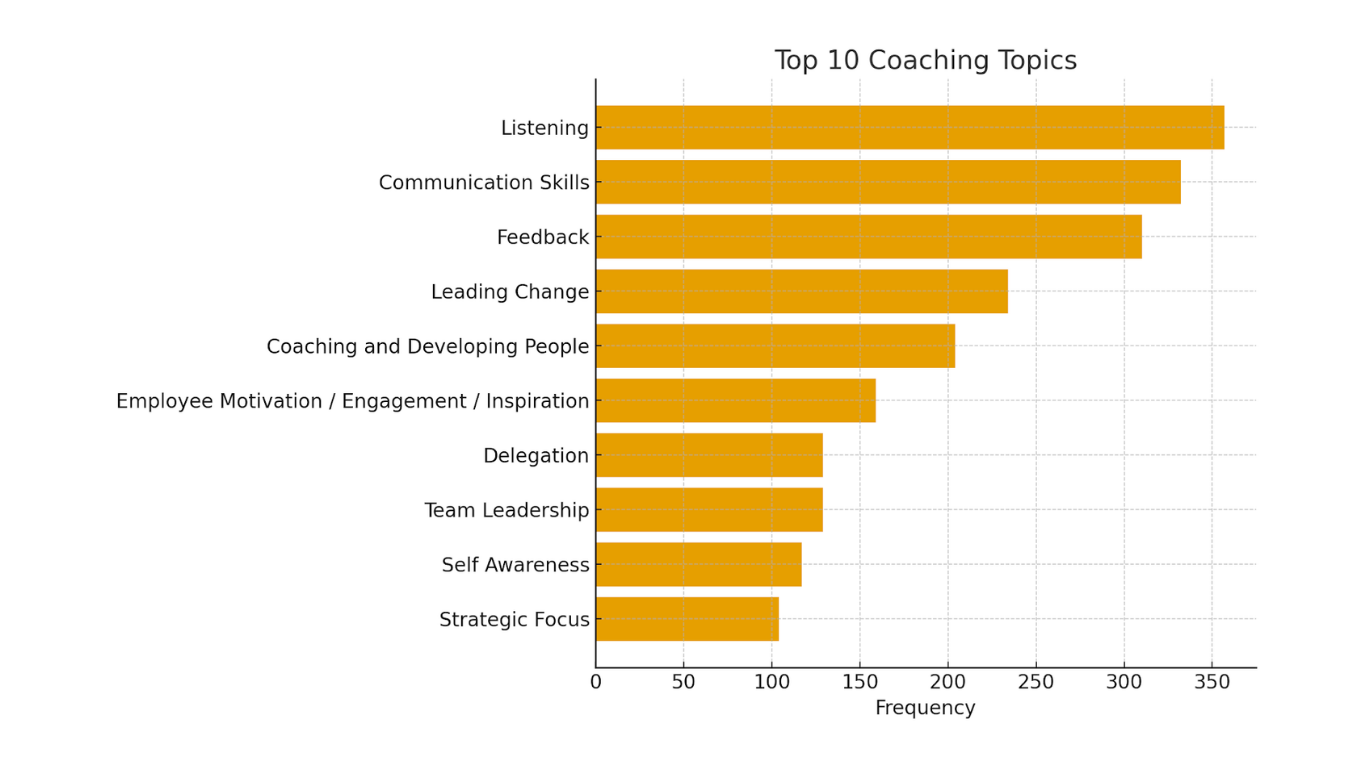
This shift signals a meaningful evolution in leadership identity. Leaders are no longer focused solely on delivering results; they are redefining effectiveness through connection, influence, and trust.
Communication as the New Core Competency
One of the clearest insights from Optify’s customer data is how consistently leaders prioritize communication. They wrote goals about listening more deeply, communicating expectations with clarity, improving cross-functional relationships, and developing the confidence to express themselves with authenticity.
These patterns appeared across all leadership levels. Managers wanted to establish credibility and communicate more assertively. Directors emphasized presence, clarity, and influence. Vice presidents aimed to refine storytelling, manage conflict effectively, and guide teams through change. Despite their different responsibilities, leaders at every level shared a common motivation: to strengthen how they interact with others.
This widespread prioritization underscores a key lesson from the data: communication is no longer a soft skill; it’s a leadership engine.
The surge in communication-focused goals didn’t happen in a vacuum. Several forces shaped this shift.
Why Soft Skills Are Rising Now
1. Leadership environments have become more relational
Hybrid work, rapid decision cycles, and cross-functional collaboration demand high levels of emotional intelligence. Leaders repeatedly described wanting to build trust more deliberately, respond with empathy, and handle conflict with steadier presence. They weren’t aiming to “be nicer,” they wanted to lead more effectively in environments where connection determines outcomes.
2. Coaching expanded deeper and wider across organizations
In 2024 and 2025, more first-line managers and emerging leaders entered coaching programs. Their goals were filled with foundational relational skills: confidence, assertiveness, relationship-building, and listening. Meanwhile, senior leaders continued working on influence, executive presence, and leading change. This created a unified picture of leadership maturity where interpersonal capability is essential at every tier.
3. Year-end reflection amplified human-centered goals
November 2025 saw more than 200 goals created in a single month, a dramatic year-end surge. During this reflection-heavy period, leaders focused less on strategic ambitions and more on the leadership behaviors that would help them achieve those ambitions. The timing revealed that when leaders pause to reset, they overwhelmingly return to the fundamentals of trust, clarity, communication, and influence.
Soft Skills as Mechanisms of Performance
Although leaders didn’t frame these goals as “improving performance,” the connection is unmistakable. Across the dataset, leaders described wanting to cultivate behaviors that directly impact results:
- Build stronger, more engaged teams
- Navigate organizational change more effectively
- Increase clarity during times of uncertainty
- Strengthen collaboration across functions
- Create cultures of honesty and accountability
These goals weren’t theoretical. They were tied to real leadership challenges: mergers, reorganizations, new strategic priorities, shifting workforce expectations, and heightened pressure on managers to maintain team cohesion.
The data makes one thing clear: soft skills aren’t a retreat from performance—they’re what enable performance.
Soft Skills Aren’t Soft—They’re Structural
The coaching data from 2024–2025 makes one message unmistakably clear: leaders are refining not just their strategies, but themselves. They are moving beyond KPIs to the deeper competencies that make KPIs possible. Soft skills, the ones often minimized as optional or intangible, are emerging as the backbone of effective leadership.
As organizations continue navigating uncertainty and transformation, the leaders who excel will be the ones who listen deeply, communicate clearly, build trust intentionally, and lead with emotional steadiness. The data shows that leaders understand this, and they’re using coaching to build the human-centered capabilities that move organizations forward.
If your leaders are ready to invest in their soft skills in 2026, Optify is here to help guide the way. Connect with us to learn how!